Buy y.co.at ?
We are moving the project
y.co.at .
Are you interested in purchasing the domain
y.co.at ?
domain@kv-gmbh.de · 0541-91531010
Buy y.co.at ?
What does l'homme de la nature et de la vérité mean?
L'homme de la nature et de la vérité means "the man of nature and truth" in French. This phrase refers to a person who is in tune with the natural world and seeks to live in accordance with truth and authenticity. It conveys the idea of someone who values simplicity, honesty, and a deep connection to the natural environment. This concept is often associated with the Romantic movement in literature and philosophy, which emphasized the importance of nature and the pursuit of truth. **
What is the difference between de, de la, du, des, and de?
The difference between de, de la, du, des, and de lies in their usage with different nouns. "De" is used before masculine singular nouns, "de la" before feminine singular nouns, "du" before masculine singular nouns starting with a vowel or silent "h," and "des" before plural nouns. "De" is also used before verbs and expressions of quantity. **

Similar search terms for Muscadet-Domaine-de-la
Top-Angebote
Products related to Muscadet-Domaine-de-la:
-
Muscadet Classic Domaine de l'Ecu 2023The Muscadet Classic from Domaine de l'Ecu is a white multifaceted and saline, a true sip of territory produced by one of the iconic Domains of French wine. What wines those of Guy Bossard, one of the true pioneers of respectful agriculture, where chemical or synthetic substances were banned to preserve the identity of the liquids produced, as well as the vitality of the soil of which he is the custodian and that has belonged to the Domaine for 40 years. Here, in this subzone of the Loire Valley, Melon De Bourgogne, also known as Muscadet, dominates, occupying 16 of the 22 hectares owned by Guy, surrounded by other varieties, some even red-berried, all translated into masterful interpretations, always with a focus on centrality and definition, without giving up a world-class personality. Cross-sectional wines, which have the prerogative like great wines to unite enthusiasts and non-enthusiasts. The Muscadet Classic is produced with pure Melon de Bourgogne grapes, cultivated following the principles of agriculture and biodynamics in the small village of Landreau, located near Nantes. In the vineyard, only the use of biodynamic preparations is allowed, along with a bit of copper and sulfur, and in the cellar, they proceed renouncing any type of additive, with spontaneous alcoholic fermentation and no addition of sulfur dioxide during vinification. Finally, it ages in concrete on its own yeasts for a few months before bottling. The Muscadet Classic wine presents itself in the glass with a straw-yellow hue, fine and delicate. The nose clearly defines what is meant by minerality, and offers iodized and briny puffs in addition to lemon zest and green apple. An integral and essential profile, which is confirmed in a tasting clearly driven by an impressive saline structure but supported by freshness and the right softness. A refined wine, of great elegance but irresistible at the same time.20,00 £*Shipping: 48,00 £Secure redirect to the provider
-
Muscadet de Sèvre et Maine 'Granite' Domaine de l'Ecu 2024The Muscadet de Sèvre et Maine “Granite” from the Domaine de l’Ecu winery is a fresh and mineral white wine produced in La Bretonnière in Le Landreau, in the final part of the Loire Valley, in France, which flows into the Atlantic Ocean. The “Granite” is made from pure Melon de Bourgogne grapes sourced from a single vineyard cru of about 3 hectares, facing southwest. The vines, with an average age of about 45-55 years, are cultivated using the traditional guyot method on stony soils characterized by a granite subsoil with two micas. The winery, long managed by Guy Bossard according to the principles of biodynamic philosophy, is now carried on by his disciple Fred Niger with a view to continuity in respecting and safeguarding the bond that connects each cuvée to its territory and vintage. The “Granite” Muscadet de Sèvre et Maine is produced with carefully selected and hand-harvested grapes in small crates. The bunches are then brought to the winery and subjected to soft pressing and to alcoholic fermentation, which occurs spontaneously using only indigenous yeasts, in underground cement tanks. At this point, the wine is aged for several months on its fine lees in underground cement vats and bottled without filtration. The Muscadet de Sèvre et Maine “Granite” from Domaine de l’Ecu presents itself with a beautiful very bright golden yellow color. On the nose, intense aromas of yellow-fleshed fruits appear, including peach and melon, citrus notes, floral notes of white flowers, ending with mineral hints reminiscent of wet rock and flint. On the palate, the sip is taut, but at the same time rich and complex, endowed with great finesse and a very persistent finish. This label from Domaine de l’Ecu is an excellent expression of the territory, a wine of great personality and balance.22,00 £*Shipping: 48,00 £Secure redirect to the provider
-
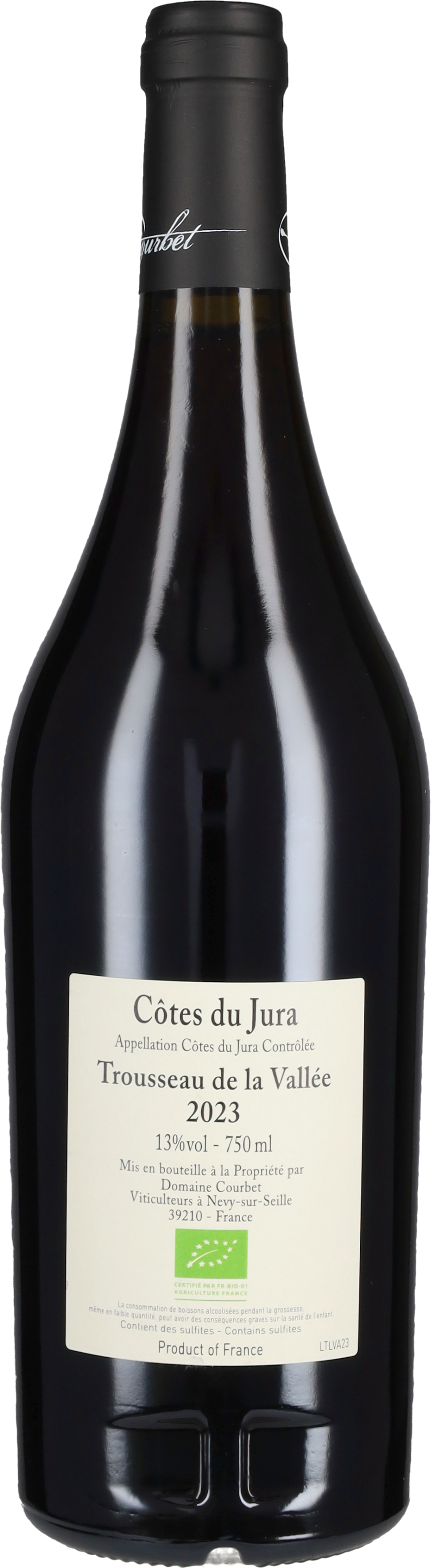
Ploussard Domaine de La Renardiere 2024The Ploussard from Domaine de la Renardiere is the traditional red of Jura, produced with the homonymous indigenous grape variety that has been present in the region for centuries. It is an elegant wine, with a slender and fresh profile, captivating for its delicate fruit fragrance and its typically territorial character, which brings to the forefront a pleasant mineral vein. It is a red wine with a tense and flowing sip, perfectly in tune with the classic character of wines that come from cool climates and are born in areas close to the mountains. The Ploussard wine is born at Domaine de la Renardiere, a small family-owned estate with a total area of just over 7 hectares, managed under organic farming practices with great attention to the surrounding environment and biodiversity. The winery was founded in 1990 by Jean Michel Petit, who after several years of experience in California, returned to his homeland to start a new adventure. Despite his international training, Jean Michel has directed production towards wines of great territorial typicity, favoring indigenous grape varieties and the oldest winemaking techniques to produce Vin Jaune. The great knowledge of the different soils of the various plots has allowed for planting each variety in the most suitable place, achieving the best results from the perfect grape-soil combination. The red Ploussard from Domaine de la Renardiere is a wine produced with an ancient grape variety, found almost exclusively in the Jura region. The grapes come from vines that are over 30 years old and are cultivated on red limestone-clay marl. Fermentation takes place in steel with indigenous yeasts and a maceration on the skins for about ten days. The wine matures for 12 months in large barrels and is bottled without filtration. The color is a rather light ruby red. The bouquet expresses delicately spicy aromas, of aromatic herbs, ripe blackberries, and underbrush, with mineral hints of graphite. On the palate, it has a medium body, a delicate tannic structure, fruity, fragrant, and juicy aromas, leading to a fresh and tense finish, characterized by a pleasant vein tasty. A red of great personality, absolutely to be discovered.34,00 £*Shipping: 48,00 £Secure redirect to the provider


-
Who was Jean de La Fontaine?
Jean de La Fontaine was a French poet and fabulist who lived in the 17th century. He is best known for his collection of fables, which were written in verse and often featured animals as characters to convey moral lessons. La Fontaine's fables are still widely read and studied for their wit, humor, and timeless wisdom. He is considered one of the greatest French poets of his time and his work continues to be celebrated for its enduring appeal. **
-
What does "La Marquise de Pompadour est la maîtresse de Louis XV" mean translated into German?
"La Marquise de Pompadour est la maîtresse de Louis XV" translates to "Die Marquise von Pompadour ist die Geliebte von Louis XV" in German. **
-
When do you use "de, de el, del, and de la" in Spanish?
In Spanish, "de" is used to indicate possession or relationship between two nouns, for example: el libro de Juan (Juan's book). "De el" is contracted to "del" and is used when the noun following it is masculine singular, for example: el libro del estudiante (the student's book). "De la" is used when the noun following it is feminine singular, for example: la casa de la abuela (the grandmother's house). These prepositions are used to show possession or relationship between two nouns in Spanish. **
-
Why does De La Soul do that?
De La Soul is known for their innovative and unique approach to hip-hop music, often incorporating eclectic samples, playful lyrics, and unconventional song structures. They do this to push the boundaries of the genre and create music that is both thought-provoking and enjoyable. Their willingness to experiment and take risks has allowed them to remain influential and relevant in the hip-hop community for decades. **
When do we use du, de la, de l', and des?
We use "du" when referring to masculine singular nouns, "de la" when referring to feminine singular nouns, "de l'" when referring to singular nouns starting with a vowel or silent 'h', and "des" when referring to plural nouns. These articles are partitive articles used to indicate an unspecified quantity or part of something. For example, "du pain" (some bread), "de la salade" (some salad), "de l'eau" (some water), and "des fruits" (some fruits). **
When do you use du, de la, de l' and des?
You use "du" when referring to masculine singular nouns, "de la" when referring to feminine singular nouns, "de l'" when referring to singular nouns that start with a vowel or silent "h", and "des" when referring to plural nouns. These are partitive articles used to indicate an unspecified quantity or some of something. For example, "du pain" (some bread), "de la confiture" (some jam), "de l'eau" (some water), and "des fruits" (some fruits). **
Top-Angebote
Products related to Muscadet-Domaine-de-la:
-
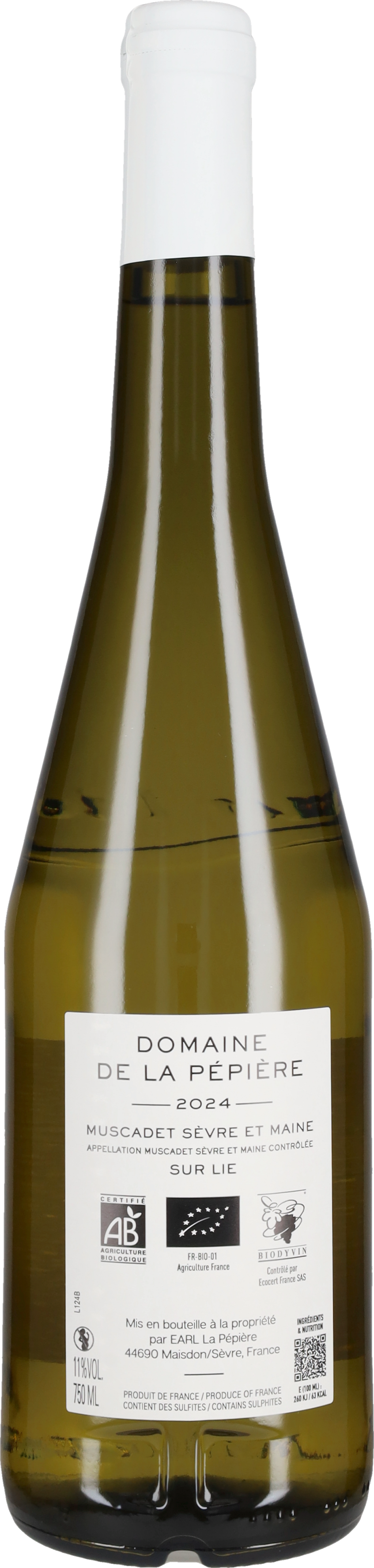
Domaine de la Pépière Muscadet de Sèvre et Maine Domaine de la Pepiere 2025The Muscadet from Domaine de La Pepiere is a liquid splendid in its iodized essence, which contradicts those who advocate its consumption exclusively as a young wine. Domaine de la Pepiere is a bastion located at the northern tip of Brittany and extends over approximately 35 hectares, almost exclusively dedicated to the production of white grape varieties. Historical evidence confirms the particular affinity of Muscadet, a grape often underestimated, for these places that have an essential and rocky conformation. The choice of Marc, the founder of the Domaine in 1984, was to establish a strong connection between the vines and the area of origin, with the help of Remi and Gwenaelle, who led him to opt for a definitive conversion to biodynamics. Crystal-clear expressions of terroir. The wine Muscadet de Sevre et Maine is produced from pure Melon de Bourgogne grapes, selected from a 12-hectare vineyard with vines approximately 25 years old. The vines grow on granitic soil, without the use of any chemical or synthetic substances, with manual harvesting of the clusters and attached sorting. In the cellar, the process continues with a soft pressing of the grapes, and fermentation that occurs spontaneously in vitrified cement tanks. The liquid then matures for 6 months in the same container and is bottled without any racking. The Domaine de La Pepiere Muscadet presents itself in the glass with a straw-yellow hue adorned with golden reflections. An extremely subtle and ethereal nose, delicately unfolding notes of green apple, hawthorn, thyme, and distinct iodized breezes. A varied yet always whispered profile endowed with extreme finesse. On the palate, the liquid is no less, revealing a blend of freshness and salinity, making it a versatile and extremely adaptable wine for everyday dining, but also worth trying with a plate of oysters. The persistence, delicate and understated, is due to a refined saline texture. A splendid expression in subtraction!17,00 £*Shipping: 48,00 £Secure redirect to the provider
-
Muscadet 'Domaine de la Bretonnière' Maison Foucher 2024Maison Foucher presents the Muscadet de Sèvre et Maine sur Lie ‘Domaine de la Bretonnière’, a white wine of commendable verticality that is appreciated for its pronounced mineral vein. This bottle is part of the ‘Cuvées’ line, interpretations that Marc Vappereau, winemaker of Maison Foucher since 2001 and owner of the Domaine since 2013, carefully selects following exclusively his instinct. In this case, Marc's instinct led us to discover the Muscadet de Sèvre et Maine, an AOC from the westernmost tip of the Loire Valley based on the traditional grape variety Melon de Bourgogne, which as the name suggests is originally from Burgundy. ‘Domaine de la Bretonnière’ Maison Foucher Muscadet de Sèvre et Maine sur Lie is made from only Melon de Bourgogne grapes grown in accordance with the principles of organic farming on soils mainly composed of granite and schist. The climate is cool and Atlantic, and after harvesting, the grapes are vinified in white through soft pressing and fermentationin stainless steel tanks. Also in steel takes place the subsequent maturation phase of a few months that occurs on the fine lees, “sur lie” to say it in French, a technique that brings structure and complexity to the wine. The Muscadet de Sèvre et Maine sur Lie ‘Domaine de la Bretonnière’ by Maison Foucher has a bright straw yellow color with greenish reflections. On the nose, there are hints of pear, peach, lemon zest, grapefruit, jasmine, and peony, while on the palate it is rich, very fresh, and well balanced, with a pronounced mineral finish. The ideal pairing for Muscadet de Sèvre et Maine is seafood, particularly oysters, a delicacy widespread in the Nantes area from which this wine comes.11,00 £*Shipping: 48,00 £Secure redirect to the provider
-
Muscadet Classic Domaine de l'Ecu 2023The Muscadet Classic from Domaine de l'Ecu is a white multifaceted and saline, a true sip of territory produced by one of the iconic Domains of French wine. What wines those of Guy Bossard, one of the true pioneers of respectful agriculture, where chemical or synthetic substances were banned to preserve the identity of the liquids produced, as well as the vitality of the soil of which he is the custodian and that has belonged to the Domaine for 40 years. Here, in this subzone of the Loire Valley, Melon De Bourgogne, also known as Muscadet, dominates, occupying 16 of the 22 hectares owned by Guy, surrounded by other varieties, some even red-berried, all translated into masterful interpretations, always with a focus on centrality and definition, without giving up a world-class personality. Cross-sectional wines, which have the prerogative like great wines to unite enthusiasts and non-enthusiasts. The Muscadet Classic is produced with pure Melon de Bourgogne grapes, cultivated following the principles of agriculture and biodynamics in the small village of Landreau, located near Nantes. In the vineyard, only the use of biodynamic preparations is allowed, along with a bit of copper and sulfur, and in the cellar, they proceed renouncing any type of additive, with spontaneous alcoholic fermentation and no addition of sulfur dioxide during vinification. Finally, it ages in concrete on its own yeasts for a few months before bottling. The Muscadet Classic wine presents itself in the glass with a straw-yellow hue, fine and delicate. The nose clearly defines what is meant by minerality, and offers iodized and briny puffs in addition to lemon zest and green apple. An integral and essential profile, which is confirmed in a tasting clearly driven by an impressive saline structure but supported by freshness and the right softness. A refined wine, of great elegance but irresistible at the same time.20,00 £*Shipping: 48,00 £Secure redirect to the provider
-
Muscadet de Sèvre et Maine 'Granite' Domaine de l'Ecu 2024The Muscadet de Sèvre et Maine “Granite” from the Domaine de l’Ecu winery is a fresh and mineral white wine produced in La Bretonnière in Le Landreau, in the final part of the Loire Valley, in France, which flows into the Atlantic Ocean. The “Granite” is made from pure Melon de Bourgogne grapes sourced from a single vineyard cru of about 3 hectares, facing southwest. The vines, with an average age of about 45-55 years, are cultivated using the traditional guyot method on stony soils characterized by a granite subsoil with two micas. The winery, long managed by Guy Bossard according to the principles of biodynamic philosophy, is now carried on by his disciple Fred Niger with a view to continuity in respecting and safeguarding the bond that connects each cuvée to its territory and vintage. The “Granite” Muscadet de Sèvre et Maine is produced with carefully selected and hand-harvested grapes in small crates. The bunches are then brought to the winery and subjected to soft pressing and to alcoholic fermentation, which occurs spontaneously using only indigenous yeasts, in underground cement tanks. At this point, the wine is aged for several months on its fine lees in underground cement vats and bottled without filtration. The Muscadet de Sèvre et Maine “Granite” from Domaine de l’Ecu presents itself with a beautiful very bright golden yellow color. On the nose, intense aromas of yellow-fleshed fruits appear, including peach and melon, citrus notes, floral notes of white flowers, ending with mineral hints reminiscent of wet rock and flint. On the palate, the sip is taut, but at the same time rich and complex, endowed with great finesse and a very persistent finish. This label from Domaine de l’Ecu is an excellent expression of the territory, a wine of great personality and balance.22,00 £*Shipping: 48,00 £Secure redirect to the provider
-
What does l'homme de la nature et de la vérité mean?
L'homme de la nature et de la vérité means "the man of nature and truth" in French. This phrase refers to a person who is in tune with the natural world and seeks to live in accordance with truth and authenticity. It conveys the idea of someone who values simplicity, honesty, and a deep connection to the natural environment. This concept is often associated with the Romantic movement in literature and philosophy, which emphasized the importance of nature and the pursuit of truth. **
-
What is the difference between de, de la, du, des, and de?
The difference between de, de la, du, des, and de lies in their usage with different nouns. "De" is used before masculine singular nouns, "de la" before feminine singular nouns, "du" before masculine singular nouns starting with a vowel or silent "h," and "des" before plural nouns. "De" is also used before verbs and expressions of quantity. **
-
Who was Jean de La Fontaine?
Jean de La Fontaine was a French poet and fabulist who lived in the 17th century. He is best known for his collection of fables, which were written in verse and often featured animals as characters to convey moral lessons. La Fontaine's fables are still widely read and studied for their wit, humor, and timeless wisdom. He is considered one of the greatest French poets of his time and his work continues to be celebrated for its enduring appeal. **
-
What does "La Marquise de Pompadour est la maîtresse de Louis XV" mean translated into German?
"La Marquise de Pompadour est la maîtresse de Louis XV" translates to "Die Marquise von Pompadour ist die Geliebte von Louis XV" in German. **
Similar search terms for Muscadet-Domaine-de-la
-
Ploussard Domaine de La Renardiere 2024The Ploussard from Domaine de la Renardiere is the traditional red of Jura, produced with the homonymous indigenous grape variety that has been present in the region for centuries. It is an elegant wine, with a slender and fresh profile, captivating for its delicate fruit fragrance and its typically territorial character, which brings to the forefront a pleasant mineral vein. It is a red wine with a tense and flowing sip, perfectly in tune with the classic character of wines that come from cool climates and are born in areas close to the mountains. The Ploussard wine is born at Domaine de la Renardiere, a small family-owned estate with a total area of just over 7 hectares, managed under organic farming practices with great attention to the surrounding environment and biodiversity. The winery was founded in 1990 by Jean Michel Petit, who after several years of experience in California, returned to his homeland to start a new adventure. Despite his international training, Jean Michel has directed production towards wines of great territorial typicity, favoring indigenous grape varieties and the oldest winemaking techniques to produce Vin Jaune. The great knowledge of the different soils of the various plots has allowed for planting each variety in the most suitable place, achieving the best results from the perfect grape-soil combination. The red Ploussard from Domaine de la Renardiere is a wine produced with an ancient grape variety, found almost exclusively in the Jura region. The grapes come from vines that are over 30 years old and are cultivated on red limestone-clay marl. Fermentation takes place in steel with indigenous yeasts and a maceration on the skins for about ten days. The wine matures for 12 months in large barrels and is bottled without filtration. The color is a rather light ruby red. The bouquet expresses delicately spicy aromas, of aromatic herbs, ripe blackberries, and underbrush, with mineral hints of graphite. On the palate, it has a medium body, a delicate tannic structure, fruity, fragrant, and juicy aromas, leading to a fresh and tense finish, characterized by a pleasant vein tasty. A red of great personality, absolutely to be discovered.34,00 £*Shipping: 48,00 £Secure redirect to the provider
-
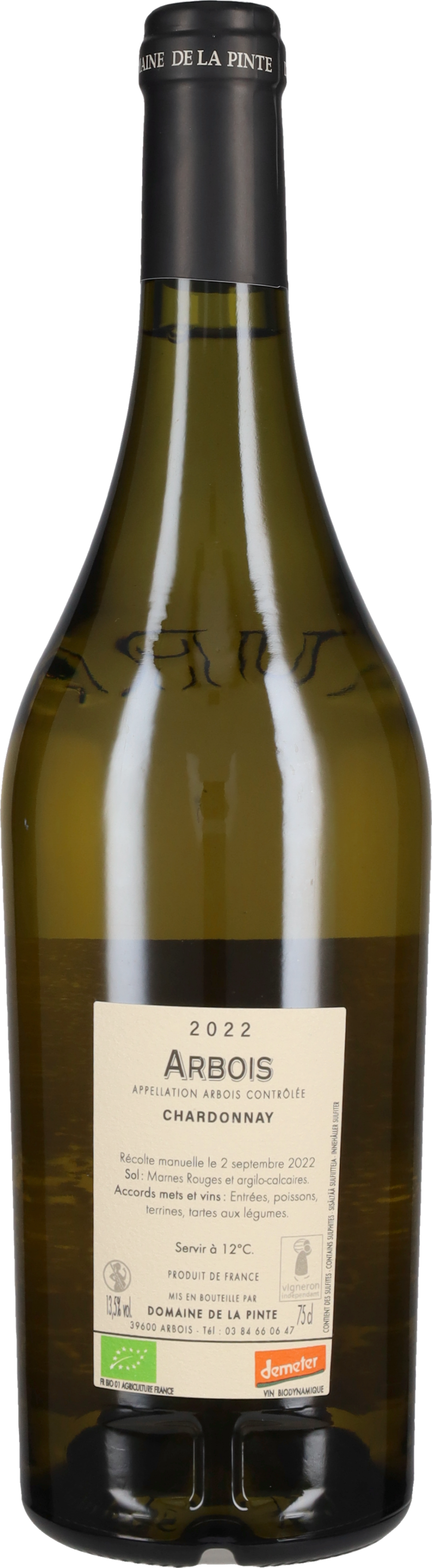
Arbois Chardonnay Domaine de la Pinte 2022The Chardonnay from Domaine de la Pinte is the white wine of choice for getting to know the Jura region. This land, which forms the watershed between Switzerland and Burgundy, has always been little known to wine lovers, despite its extraordinary potential. However, it has recently begun to make a name for itself thanks to the emergence of wineries, driven by sustainable agriculture, which have promoted quality viticulture, making the most of the prestigious blue marl soil and the great vines of the area. Among these, a place of honour is reserved for Domaine de la Pinte which, following a biodynamic approach and participating in artisan movements and fairs such as Vinnatur, has launched the production of authentic, territorial white wines, becoming one of the most important producers in the area. This Chardonnay is the most concrete proof of this, faithfully reflecting all the characteristics of the variety: fresh, round and rich. In addition, the soils on which it is grown give it that distinctive and unmistakable mineral note. An expression that allows you to discover one of the many facets of the Jura through a straightforward bottle offering excellent value for money.Chardonnay wine is produced in the hills of the municipality of Arbois, at an altitude of about 400 metres, on soils composed of characteristic blue marl with fossils and clay. The vineyards, cultivated according to the biodynamic philosophy introduced by oenologist Bruno Ciofi in 2009, have been organically farmed since 1999. Operations in the vineyard are kept to a minimum, as are those in the cellar, where the must ferments spontaneously with its own native yeasts. Maturation takes place in pièces, also known as Burgundy barrels, which are 228-litre wooden barrels.The Domaine de la Pinte Chardonnay encapsulates all the characteristic nuances of the grape in its straw yellow colour, combined with the unique characteristics of the Jura soil. Starting with the nose, it displays a fairly rich and pungent aromatic profile, with concentrated notes of wild herbs, mountain flowers, crisp apple and mineral hints, seasoned with citrus juice. On the palate, it is not elegant and aromatic, but it is appreciated for its virtuous and invigorating freshness and for the richness and softness that distinguish this type of wine. Good persistence and excellent finish. Simply Jura.38,00 £*Shipping: 48,00 £Secure redirect to the provider
-
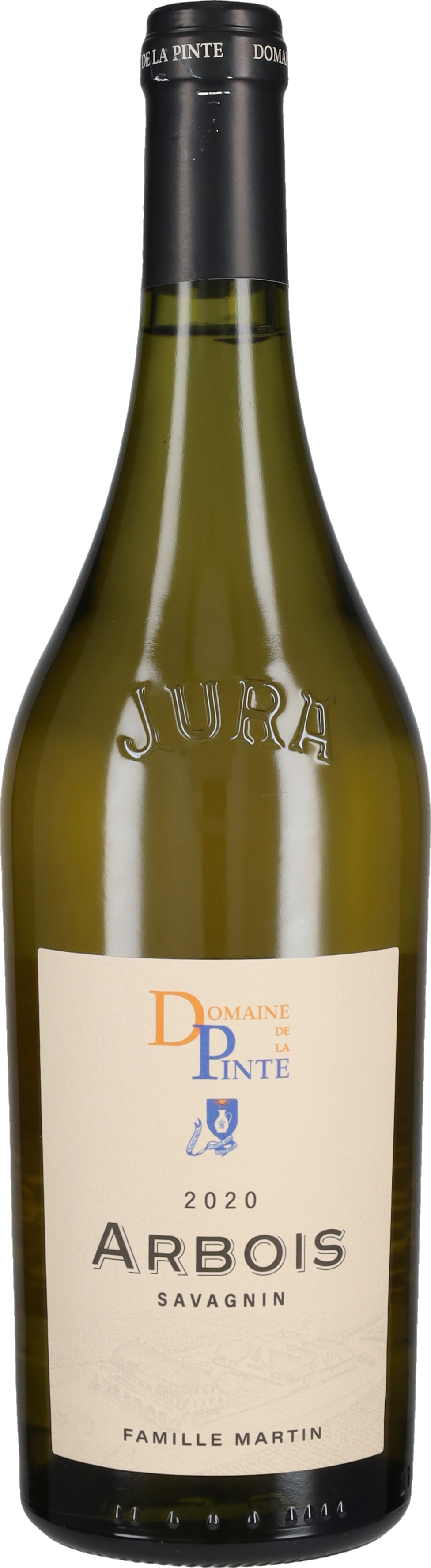
Savagnin 'Ouillé 36 mesi' Domaine de la Pinte 2020“Ouillé 36 mesi” è un concentrato di Jura, espressione pura e sincera del Savagnin. Si tratta di una delle prestigiose etichette firmate Domaine de la Pinte che hanno contribuito al successo della cantina e della zona. Ci troviamo nella “regione”, se così si può chiamare, dello Jura, per secoli considerata la sorella minore della Borgogna. Infatti nel passato questa area è sempre stata offuscata dalle leggendarie creature della Borgogna, facendo fatica ad emergere. Anno dopo anno, un numero sempre più alto di talentuosi produttori, seguendo un approccio rispettoso e sensibile nel confronto della pianta e del territorio, hanno reso la zona giurassiana una delle più innovative ed interessanti. Il binomio grande territorio e nobili vitigni ha consacrato la fama di queste terre e dei suoi prodotti. Ed è così, infatti, che nasce questa perla del Domaine, incontro tra le marne blu di Arbois e il Savagnin, l’uva di riferimento della zona, nota principalmente per dar luce a bottiglie dallo stile ossidativo. In questo caso viene realizzata secondo la tecnica dell’Ouillè che mira a colmare tutte le botti per evitare che si generino note ossidative. “Ouillé 36 mesi” Savagnin nasce sulle colline oltralpe di Arbois, composte da marne blu con componenti fossili, calcaree e argillose. Le viti, che sorgono a circa 400 metri di altitudine, risentono del clima semicontinentale e delle leggere brezze oceaniche. L’approccio in vigna segue i principi dell’agricoltura biodinamica e vieta l’utilizzo di qualsivoglia sostanza chimica. Soltanto così si può preservare l’integrità del terreno e il ciclo della natura. In cantina le fermentazioni sono attivate da lieviti indigeni e l’affinamento, che dura 36 mesi, avviene nelle classiche “barrique” di legno da 228 litri secondo lo stile Ouillè che prevede continue ricolmature. Il Domaine de la Pinte 36 mesi si tinge con un magnifico manto dorato intenso. Il naso trabocca di note di agrumi maturi e frutta secca, intervallate da sentori di spezie dolci, frutta esotica e sensazioni minerali e gessose. Al palato la linea gustativa risulta morbida e fine, equilibrata perfettamente da una solida spalla acida. Ottima la freschezza, leggermente aromatica, che ne allunga la persistenza. Una perfetta scelta per apprezzare la finezza degli Ouillè!53,00 £*Shipping: 48,00 £Secure redirect to the provider
-
When do you use "de, de el, del, and de la" in Spanish?
In Spanish, "de" is used to indicate possession or relationship between two nouns, for example: el libro de Juan (Juan's book). "De el" is contracted to "del" and is used when the noun following it is masculine singular, for example: el libro del estudiante (the student's book). "De la" is used when the noun following it is feminine singular, for example: la casa de la abuela (the grandmother's house). These prepositions are used to show possession or relationship between two nouns in Spanish. **
-
Why does De La Soul do that?
De La Soul is known for their innovative and unique approach to hip-hop music, often incorporating eclectic samples, playful lyrics, and unconventional song structures. They do this to push the boundaries of the genre and create music that is both thought-provoking and enjoyable. Their willingness to experiment and take risks has allowed them to remain influential and relevant in the hip-hop community for decades. **
-
When do we use du, de la, de l', and des?
We use "du" when referring to masculine singular nouns, "de la" when referring to feminine singular nouns, "de l'" when referring to singular nouns starting with a vowel or silent 'h', and "des" when referring to plural nouns. These articles are partitive articles used to indicate an unspecified quantity or part of something. For example, "du pain" (some bread), "de la salade" (some salad), "de l'eau" (some water), and "des fruits" (some fruits). **
-
When do you use du, de la, de l' and des?
You use "du" when referring to masculine singular nouns, "de la" when referring to feminine singular nouns, "de l'" when referring to singular nouns that start with a vowel or silent "h", and "des" when referring to plural nouns. These are partitive articles used to indicate an unspecified quantity or some of something. For example, "du pain" (some bread), "de la confiture" (some jam), "de l'eau" (some water), and "des fruits" (some fruits). **
* All prices are inclusive of VAT and, if applicable, plus shipping costs. The offer information is based on the details provided by the respective shop and is updated through automated processes. Real-time updates do not occur, so deviations can occur in individual cases. ** Note: Parts of this content were created by AI.